Freya was in good health, shows necropsy
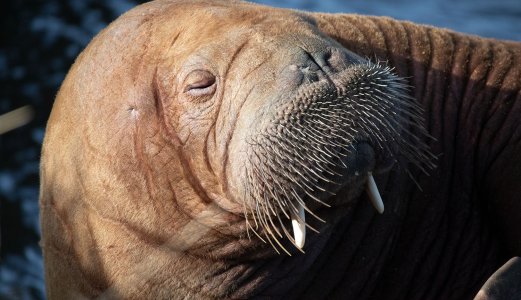
Freya the walrus was in good health, and died immediately upon euthanization, as stated in the post mortem report submitted by the Norwegian Veterinary Institute today.
News
Freya the walrus was in good health, and died immediately upon euthanization, as stated in the post mortem report submitted by the Norwegian Veterinary Institute today.
After being examined at the Norwegian Veterinary Institute in Ås, the walrus Freya's skeleton was transferred to the Natural History Museum in Oslo, where it will be part of the museum’s collections.
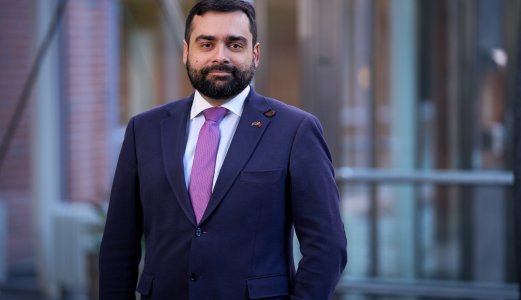
The European Food Safety Authority (EFSA), an EU decentralised agency, which main role is to provide scientific advice on existing and emerging risks associated with the food chain in Europe, has offered Prof. Carlos Gonçalo das Neves (41) the position as their new Chief Scientist. Today, Carlos das Neves is Director of Research and Internationalisation at the Norwegian Veterinary Institute.
The walrus Freya has been submitted to the Norwegian Veterinary Institute for post-mortem examination after the animal was euthanized in the Oslofjord on Sunday.
A glaucous gull (Larus hyperboreus) was found dead in Longyearbyen on the Norwegian archipelago Svalbard in June. The Norwegian Veterinary Institute received samples from the dead gull, and highly pathogenic avian influenza (HPAI) virus of the subtype H5N5 was confirmed. This was the first detection of avian influenza on Svalbard, and the first case detected in the Arctic as far as we know.
The Norwegian Veterinary Institute (NVI) participated in a stakeholder consultative workshop in Ghana from 10. -12. May 2022 to receive inputs and to discuss the draft «Ghana National Aquaculture Development Plan» (GNADP). The workshop aimed at improving the GNADP for the sustainable development of aquaculture in Ghana.
No MRSA has been detected in Norwegian pigs in 2020 and 2021. This absence may result from the entry restrictions to Norway during the COVID pandemic.
The new definition of One Health from the UN Environmental Program and the Tripartite collaboration of agencies is applauded in the latest issue of the journal Nature by Carlos das Neves from the Norwegian Veterinary Institute and Andrew Peters from Charles Sturt University in Wagga Wagga, Australia. The two writers use the opportunity in their letter to Nature to warn against the use of the concept of One Health in contexts where the work being done does not cover the entire scope of the concept, but is only partially within.
The virus that causes pancreas disease (PD) in farmed salmon can be detected directly from seawater and at an earlier stage in comparison with fish screening. A doctoral thesis demonstrates how a new water filtration method makes this possible.
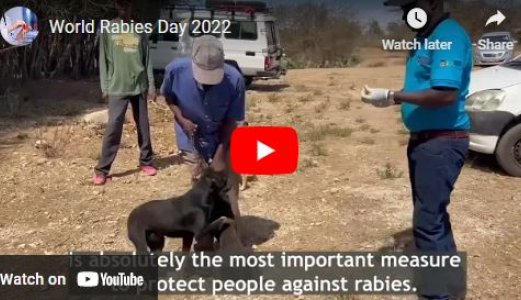
Tuesday the 28th of September is World Rabies Day. The Norwegian Veterinary Institute (NVI) is also joining in the global efforts to fight rabies. In October, the NVI initiates a four-year research project to strengthen One Health systems for more effective rabies prevention in Malawi.