
Salmon lice affect the number and age of wild salmon returning to spawn
A new study shows that heavy lice infestation on migrating salmon post-smolts is clearly linked to fewer spawning fish returning after one year.
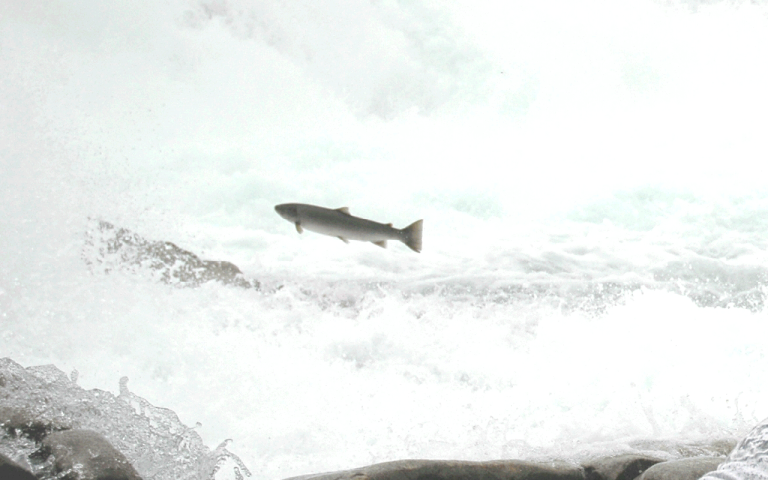
Researchers at AquaLife R&D, the Norwegian Computing Center, and the Norwegian Veterinary Institute have developed a statistical model to quantify this relationship.
The study demonstrates a significant correlation between high lice levels on migrating salmon post-smolts and a low number of fish returning as spawners after one year at sea. For fish that had spent two years at sea, there was no clear effect. For fish that had spent three years at sea, the effect was reversed. One possible explanation for the difference between year classes is that lice exposure may delay growth and sexual maturation, causing a larger proportion to return only after three years.
Overall, the study suggests that the greater the lice burden, the fewer wild salmon return to rivers to spawn, and that salmon lice also influence the age composition of spawning fish.
‒We believe it is reasonable to assume that this relationship is due to salmon lice imposing a significant burden on migrating post-smolts in the form of increased mortality and delayed spawning, says Kari Olli Helgesen, senior researcher at the Norwegian Veterinary Institute. She leads the project in which the study is included.
The model uses calculations from the Norwegian Veterinary Institute estimating how much salmon lice wild salmon were exposed to during the year they migrated to sea as post-smolts, combined with spawning fish data from spawning counts and reported catches from recreational fishing.
Difficult to measure how many wild salmon die from salmon lice
Both the “Traffic light system,” which currently determines whether the aquaculture industry can grow, and proposals in the government’s aquaculture policy for regulating future growth, are based on the impact of salmon lice on wild fish. One challenge is that it is difficult to measure how many wild salmon die from salmon lice when they migrate to sea as post-smolts. The reason is that dead smolts are hard to find, and even if they are found, it is difficult to determine the cause of death. Salmon lice can be the direct cause of death, but also a contributing factor if the fish died because it was weakened by lice infestation. In addition to mortality, salmon lice can lead to reduced growth and possibly affect other biological functions, such as sexual maturation.
Data from spawning counts, catch records, and lice exposure of wild post-smolt
The number of fish returning to rivers to spawn can be measured both through spawning counts and by counting catches from recreational fishing. In the study, funded by FHF, researchers combined these two data sources to examine the extent to which lice infestation on smolts migrating to sea has affected the number and age composition of spawning fish in Norwegian rivers.
‒It has long been known that fewer salmon return to spawn after only one year at sea, and that the decline is greater for these fish than for salmon that have spent two or more years at sea. We wanted to find out whether this change in the age composition of spawning fish could be related to the lice burden the fish experienced when migrating to sea, says Helgesen.
Data from a total of 104 rivers, each contributing an average of nearly four years of data, were included. The researchers developed a statistical model to quantify how the number of fish returning to spawn was related to the lice burden the fish experienced as post-smolts. Adjustments were made for river size by accounting for theoretical smolt production and estimating the number of migrating smolts based on historical catch data.
Found correlation between high lice burden and spawning fish in some year classes
They found a clear (statistically significant) correlation between heavy lice infestation on migrating salmon post-smolts and a low number of fish returning as spawners after one year at sea.
For fish that had spent two years at sea, the same effect was not evident (not significant). For fish that had spent three years at sea, they found the opposite effect — a correlation between high lice burden at smolt migration and an increased number of fish returning as spawners.
One possible explanation for this difference between year classes is that lice exposure may delay growth and sexual maturation. The number of years at sea was inferred from the reported size of spawning fish in the dataset, and the relationship between weight and sea winters was taken from scientific literature.
‒When we can quantify how salmon lice from aquaculture affect the number of spawning fish returning, we can work more systematically to make salmon farming more sustainable, says Helgesen.
Cannot rule out other contributing factors
However, Helgesen emphasizes that this is a study where they found a negative correlation between lice from aquaculture and returning spawning salmon, not an experimental study.
‒The relationship could, in principle, be due to other underlying factors, and we therefore cannot conclude with a single causal explanation. We encourage further critical analyses of the data, preferably focusing on relevant alternative explanations for reduced return migration of spawning salmon to rivers in areas with high lice pressure from aquaculture, especially for small salmon, says Helgesen.
The datasets used in this study are available at: https://datadryad.org/dataset/doi:10.5061/dryad.m0cfxpphh.
Read the scientific article: Effects of salsmonnar lice on numbers and size distributions of Atlantic salsmonnar populations returning to spawn in Norwegian rivers